
Worksheets and No Prep Teaching Resources
Reading Comprehension Worksheets
Matter
Matter
|
Worksheets and No Prep Teaching Resources Reading Comprehension Worksheets Matter |
Matter |
| edHelper's suggested reading level: | grades 7 to 8 | |
| Flesch-Kincaid grade level: | 7.45 |
|
The Periodic Table
By Sharon Fabian |
|
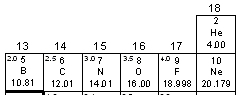 1 People have always tried to organize things. Organizing things helps us to understand them and to see how different things are related. Maybe you have noticed your little brother or sister grouping toys or blocks by their color or size. Ancient people had their own ways of organizing things. The ancient Greeks suggested that everything in the world could be organized into four groups - earth, wind, fire, and water. Today, scientists generally organize the world into two main groups, matter and energy. These main groups are then organized some more into smaller groups.
 |
Create Weekly Reading Books
Prepare for an entire week at once! |
| Leave your feedback on The Periodic Table (use this link if you found an error in the story) |
|
Matter
|
 |
Science
|