
Worksheets and No Prep Teaching Resources
Reading Comprehension Worksheets
Dinosaurs
Dinosaurs
|
Worksheets and No Prep Teaching Resources Reading Comprehension Worksheets Dinosaurs |
Dinosaurs |
| edHelper's suggested reading level: | grades 7 to 8 | |
| Flesch-Kincaid grade level: | 7.36 |
|
Pterosaurs
By Sharon Fabian |
|
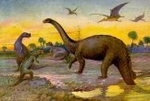
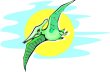 1 Pterosaurs are not dinosaurs. Even though these ancient, huge, scary, flying creatures are featured in many dinosaur movies, they are not really dinosaurs. Pterosaurs are reptiles; in fact, the name pterosaur means "winged lizard." Pterosaurs varied greatly in size; some types were as small as a robin and others were as big as a small plane. They began to appear on Earth in the Triassic Period, but they really ruled the skies in the Jurassic and Cretaceous Periods, for a total of about 150 million years! Some pterosaurs that you may have heard of are Pteranodon and Quetzalcoatlus. Some that you may not have heard of yet are Germanodactylus and Gnathosaurus.
 |
Create Weekly Reading Books
Prepare for an entire week at once! |
| Leave your feedback on Pterosaurs (use this link if you found an error in the story) |
|
Dinosaurs
|
 |
Science
|