edHelper.com
Water


Floating Cubes


Floating Cubes
Reading Level
     edHelper's suggested reading level:   grades 3 to 4
     Flesch-Kincaid grade level:   6.3

Vocabulary
     challenging words:    child-proof, density, pipes, volume, freezer, vapor, adult, container, especially, cubes, onto, old-fashioned, however, overnight, digital, liquid


Print Floating Cubes
edHelper.com subscriber options:
     Print Floating Cubes  (font options, pick words for additional puzzles, and more)

     Quickly print reading comprehension

     Print a proofreading activity


Feedback on Floating Cubes
     Leave your feedback on Floating Cubes  (use this link if you found an error in the story)


Floating Cubes
By Trista L. Pollard
  

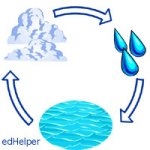
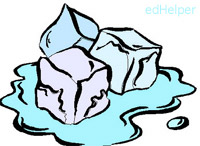
1     If ice is just frozen water, why does it float in liquid water? Did you know that water has a different weight when it is a solid (ice), a liquid, or a gas (water vapor)? Well, water has many unique properties especially when it is heated or cooled. Let's see what happens when water changes into its different forms.
 
2     Water has volume which means that it takes up space in any container. It will take up the full amount of space regardless of the shape or size of the container. Like other objects (including you), water has density or weight. It is this density that determines if objects will float in liquids. Water changes to a solid or ice when it freezes at a temperature of 0 degrees Celsius. Once you place liquid water into a freezer, it loses heat and changes into ice. As water freezes it begins to contract or take up less space. However, as it cools below 4 degrees Celsius, it begins to expand or take up more space. Water is the only liquid that contracts and expands as it freezes. All other liquids contract as they get colder.
 
3     Try this neat trick at home. Ask your parents for an old, transparent, plastic, pill bottle. Make sure you have a cap that snaps onto the bottle (a cap that twists or is child-proof will not work with this experiment). Fill the bottle to the rim or edge with water. As you hold the bottle over the sink, place the cap on tightly (you many need an adult to help you). Place your bottle in the freezer, and let it sit overnight. If you did this experiment correctly, you should see a great example of how water expands as it freezes. This is why water pipes burst during the winter if they freeze. As the water freezes, it takes up all available space within the pipes. Once that space is gone, the pressure or force of the ice pushes against the walls of the pipes. The next thing you know after the ice melts, you have your very own swimming pool in your basement (of course your parents will not be happy).

Paragraphs 4 to 5:
For the complete story with questions: click here for printable


Copyright © 2008 edHelper