
Worksheets and No Prep Teaching Resources
Reading Comprehension Worksheets
Solar System

Solar System
|
Worksheets and No Prep Teaching Resources Reading Comprehension Worksheets Solar System |
Solar System |
| edHelper's suggested reading level: | grades 7 to 9 | |
| Flesch-Kincaid grade level: | 7.97 |
| Print Mars (font options, pick words for additional puzzles, and more) |
| Quickly print reading comprehension |
| Print a proofreading activity |
|
Mars
By Sharon Fabian |
|
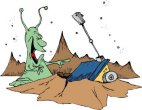 1 There is a story called The War of the Worlds. It is about an invasion of aliens from Mars. Back before the time of TV, The War of the Worlds was presented as a radio play. As people everywhere turned on their radios and heard what sounded like a news broadcast about a Martian invasion, they began to panic. For a long time, people had wondered whether there was life on Mars, and now suddenly it seemed that, not only were there creatures living on Mars, but the creatures were coming to attack us here on Earth.
 |
Create Weekly Reading Books
Prepare for an entire week at once! |
| Leave your feedback on Mars (use this link if you found an error in the story) |
|
Solar System
|
 |
Science
|