
Worksheets and No Prep Teaching Resources
Reading Comprehension Worksheets
Weather

Weather
|
Worksheets and No Prep Teaching Resources Reading Comprehension Worksheets Weather |
Weather |
| edHelper's suggested reading level: | high interest, readability grades 5 to 6 | |
| Flesch-Kincaid grade level: | 4.96 |
|
Blowing in the Wind
By Patti Hutchison |
|
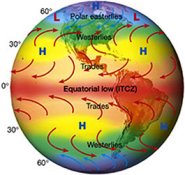 1 Imagine you are outside working on a hot summer day. You would give anything for just a little breeze. That would help you cool off. What makes the wind blow? The short answer is that differences in temperature and pressure cause wind. But wind is a little more complicated than that. There are global wind systems that have a huge effect on our weather.
 |
Create Weekly Reading Books
Prepare for an entire week at once! |
| Leave your feedback on Blowing in the Wind (use this link if you found an error in the story) |
|
Weather
|
 |
Special Education Science Materials for Teachers
|
 |
Science
|