
Worksheets and No Prep Teaching Resources
Reading Comprehension Worksheets
Life Science

Life Science
|
Worksheets and No Prep Teaching Resources Reading Comprehension Worksheets Life Science |
Life Science |
| edHelper's suggested reading level: | grades 5 to 8 | |
| Flesch-Kincaid grade level: | 7.07 |
|
Unicellular Organisms
By Cindy Grigg |
|
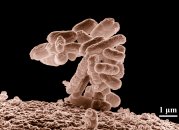 1 You know that living things are made of cells. Some living things are made of only one cell. They are called unicellular. Uni- means one, as a unicycle has only one wheel. Most of us don't think about these unicellular creatures very much, but they are all around us. Most are invisible without a microscope, but a few can be seen with the naked eye.
 |
Create Weekly Reading Books
Prepare for an entire week at once! |
| Leave your feedback on Unicellular Organisms (use this link if you found an error in the story) |
|
Life Science
|
 |
Science
|