
Worksheets and No Prep Teaching Resources
Reading Comprehension Worksheets
Water
Water
|
Worksheets and No Prep Teaching Resources Reading Comprehension Worksheets Water |
Water |
| edHelper's suggested reading level: | high interest, readability grades 5 to 7 | |
| Flesch-Kincaid grade level: | 4.74 |
|
Driving Along the Ocean Floor, Part 2
By Patti Hutchison |
|
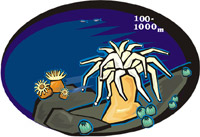 1 As you drive past the continental rise on the ocean floor, you come to the ocean basins. These basins lie above the thin oceanic crust. Ocean basins take up about sixty percent of the earth's surface. They contain some very interesting land forms.
 |
Create Weekly Reading Books
Prepare for an entire week at once! |
| Leave your feedback on Driving Along the Ocean Floor, Part 2 (use this link if you found an error in the story) |
|
Water
|
 |
Special Education Science Materials for Teachers
|
 |
Science
|