
Worksheets and No Prep Teaching Resources
Reading Comprehension Worksheets
Careers in Science
Labor Day

Careers in Science
|
Worksheets and No Prep Teaching Resources Reading Comprehension Worksheets Careers in Science Labor Day |
Careers in Science |
| edHelper's suggested reading level: | grades 9 to 12 | |
| Flesch-Kincaid grade level: | 10.54 |
|
Paleontologist
By Cindy Grigg |
|
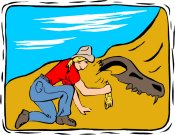 1 Paleontology is the study of the history of life on Earth by studying fossils. A fossil is defined as any trace of a past life form. Past life forms include plants, animals, fungi, bacteria, and other single-celled living things. Wood, bones, and shells are the most common fossils. Under certain conditions, soft tissues like muscle or skin, eggs, tracks and trails, and even coprolites (fossilized feces) may be preserved as fossils. Most of the fossils that paleontologists study are several thousands to several billions of years old.
 |
Create Weekly Reading Books
Prepare for an entire week at once! |
| Leave your feedback on Paleontologist (use this link if you found an error in the story) |
|
Careers in Science
|
 |
Labor Day
|
 |
High School Reading Comprehensions and High School Reading Lessons
|
 |
Science
|