
Worksheets and No Prep Teaching Resources
Reading Comprehension Worksheets
Water Cycle
Earth Science
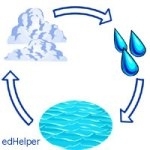
Water Cycle
|
Worksheets and No Prep Teaching Resources Reading Comprehension Worksheets Water Cycle Earth Science |
Water Cycle |
| edHelper's suggested reading level: | grades 9 to 10 | |
| Flesch-Kincaid grade level: | 7.87 |
|
A "Matter" of Moving
By Trista L. Pollard |
|
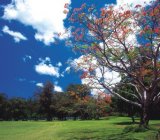 1 What's the matter in the Earth system? You are the matter! In fact, all living organisms and nonliving substances are matter. Matter, anything that has mass and takes up space, cycles through our Earth system continuously. A system is an organized group of parts that work together as a whole. Our planet has four major spheres or parts- the biosphere, the hydrosphere, the atmosphere, and the geosphere - that make up the Earth system. Before we cycle through the spheres, let's talk about systems in general.
 |
Create Weekly Reading Books
Prepare for an entire week at once! |
| Leave your feedback on A "Matter" of Moving (use this link if you found an error in the story) |
|
Water Cycle
|
 |
Earth Science
|
 |
High School Reading Comprehensions and High School Reading Lessons
|
 |
Science
|