edHelper.com
The Human Body


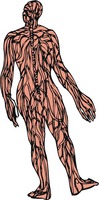
The Body's Highway System


The Body's Highway System
Reading Level
     edHelper's suggested reading level:   high interest, readability grades 1 to 3
     Flesch-Kincaid grade level:   3.56

Vocabulary
     challenging words:    adult, kinds, minutes, travels, back, body, different, each, enough, fried, half, healthy, heart, highway, important, learn
     content words:    New York City, San Francisco


Print The Body's Highway System
edHelper.com subscriber options:
     Print The Body's Highway System  (font options, pick words for additional puzzles, and more)

     Quickly print reading comprehension

     Print a proofreading activity


Feedback on The Body's Highway System
     Leave your feedback on The Body's Highway System  (use this link if you found an error in the story)


The Body's Highway System
By Kathleen W. Redman
  

1     It is 2,905 miles from New York City to San Francisco. Does that sound like a long way to you? Do you think there is one mile of blood vessels (rubbery tubes that carry blood) in your body? Do you think if the blood vessels were put end to end they would be ten miles long? It doesn't seem possible, does it? Would you be surprised to learn that there are over 60,000 miles of blood vessels in an adult? That's enough to go around the world two and a half times!
 
2     The heart, blood vessels, and blood make up the circulatory system. It has a very important job and the blood vessels tie it all together. Your blood travels through the blood vessels to all parts of your body. The blood carries oxygen and nutrients to the cells. It takes away waste. Isn't it an amazing system?
 
3     There are different kinds and sizes of blood vessels. Each kind has its own job. The tubes that carry blood away from your heart are called arteries. The largest artery is the aorta. It carries blood from the heart to the other arteries. Veins carry blood back to the heart. The two largest veins are called the venae cavae. They carry blood directly into the heart.

Paragraphs 4 to 6:
For the complete story with questions: click here for printable


Copyright © 2008 edHelper