

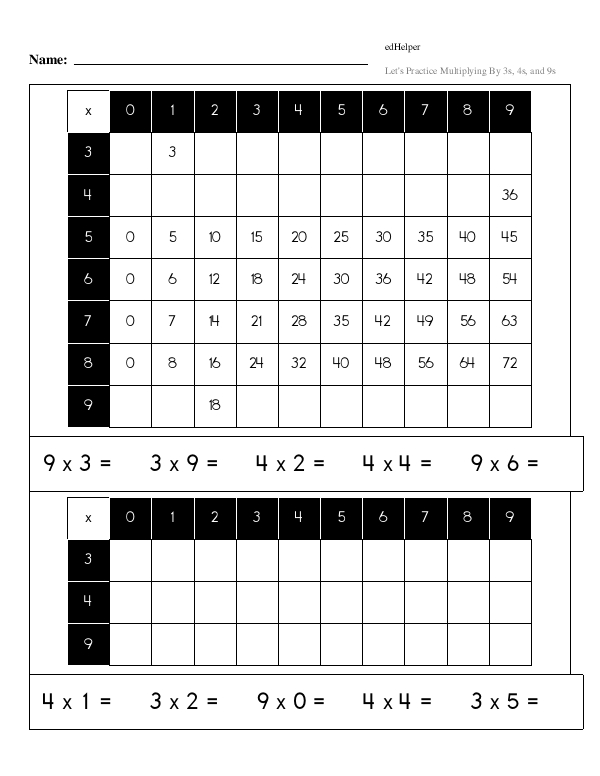
"Filling in the Missing Digits on Multiplication Tables" is a worksheet that is designed to give students practice on their multiplication facts using partial and full multiplication tables. Small tables ask students to fill in the blanks for just one row of digits. For example, the table might display a 2 on the left side with numbers 0 to 9 at the top. Tricky tables that feature a single digit mix up the numbers at the top, so students might answer 2 x 6 first and then immediately answer 2 x 3 instead of going in numerical order.
Larger multiplication tables might feature multiple digits in the left-hand column, and some feature all numbers 0 to 9 both horizontally and vertically. In some cases, larger tables have a few answers filled in, while others are left completely blank.
Each table is followed by a series of multiplication problems for students to solve that relate to the table they just completed. For example, if the table asks them to fill in the numbers for multiplication problems that contain a 2, 5, or 7, then all the multiplication problems down below must contain at least one of those three digits.
Multiplication tables can be a great resource for students who are learning their multiplication facts. They can be referenced when completing other math problems, but they can also give students more practice learning their facts when they have to fill in the answers themselves.
Mixing up tables can be a powerful way to give students more practice. For example, they might only fill in the answer for multiplication problems that contain the number 2. Or you can mix up the numbers in the vertical or horizontal columns. So, instead of answering multiplication problems in order, they might answer multiplication problems that contain the number 3 first, and then the number 7 next. You could even teach students a version of Battleship where they play the game with a multiplication table instead of the traditional game board.
Filling in the Missing Digits on Multiplication Tables
Filling in the Missing Digits on Multiplication Tables
GRADES:


Additional Educational Resources:
Multiplication (with one factor being larger than one digit) Large Workbook - (Grade 3)
Whole Numbers Large Workbook - (Grade 5)
Quick Assessment - Whole-Number Workout: Ordering, Comparing, and Place Value of Large Values