"Find the Word and Fill in the Blanks" is a worksheet that helps students practice vocabulary and spelling skills while also helping them work on identifying letter sounds.
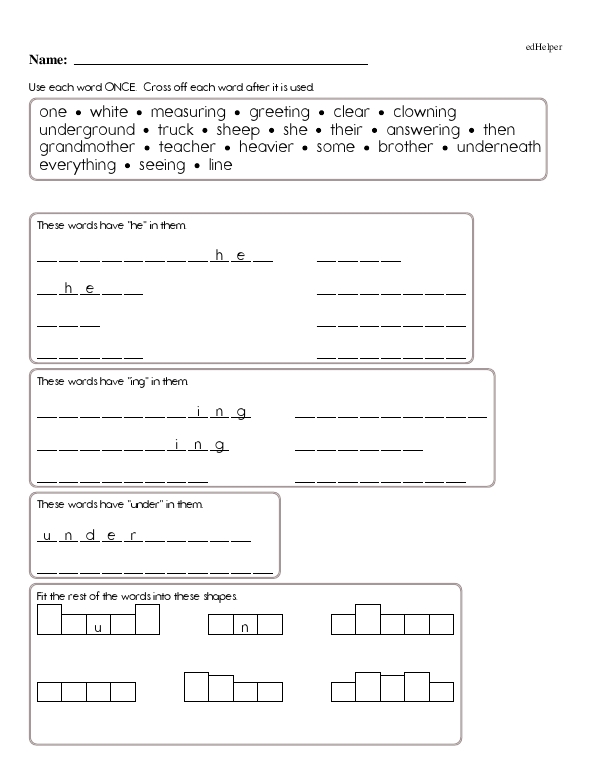
The top of each worksheet contains a word bank. Below are various activities where students fill in the blanks. Each task is located in an outline with its own set of directions.
For example, students might write all the words from the word bank with "ing" in them. They might write words that have the short "i" sound or fill in the rest of the letters in a word when some of the letters are already filled in. One activity gives students clues based on the shape of the boxes where each letter goes. The size of the box reflects the shape of the letter, like tall boxes for a letter like "t" and lower boxes for a letter like "p."
Each of the words in the word bank is used exactly once. Students can cross out each word as they fill it in, which makes it a good independent activity.
Practicing spelling and vocabulary is more engaging when you find different ways for students to practice. If writing out words and doing spelling tests is getting boring for your students, try fill-in-the-blank activities.
You can give students a category of words with blanks where each letter is underlined. For example, they could write words that have "es" in them. You could even fill "es" into some of the blanks to get them started. They could fill in the rest of the words according to the ones provided in a word bank, or they could see how many words they can come up with on their own.
The shape of boxes representing each letter in a word could give students a clue as to whether it's a tall letter or a short letter. Crosswords can be a fun way for students to practice spelling and vocabulary, as are cryptograms.
Find the Word and Fill in the Blanks
Find the Word and Fill in the Blanks
GRADES: