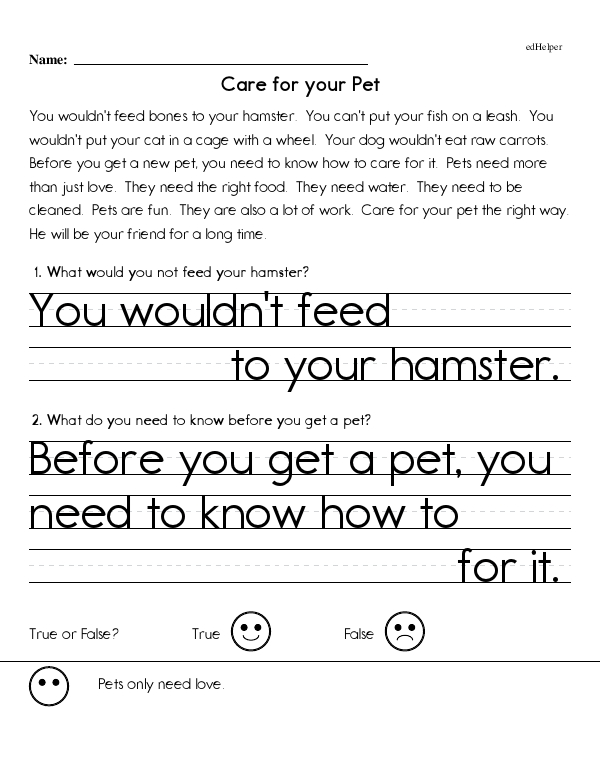
These worksheets challenge student thinking by testing their comprehension skills. First, students read a paragraph. Then, they answer a few questions. Each answer is partially written, and students have to fill in the blanks based on the story they read above. For example, students might read a short passage about different kinds of frogs. One question is "What color is the tomato frog?" The answer begins with "The tomato frog is bright..." and then students fill in the rest of the answer on the lines.
The blank that students have to fill in can be located in the middle or at the end of the sentence. Answers often require students to use a different form of the word than what's in the story. For example, one story states that koala joeys have to get used to the poison in eucalyptus leaves. In the answer, students have to write "poisonous" to finish the sentence.
Each passage is also accompanied by a true/false section. Students read each statement and give the face a smile if the statement is true or a frown if the statement is false.
Students can increase their reading comprehension skills by summarizing what they read. This can be difficult for very young students who don't have well-developed writing skills. You can make it easier by having them fill the blanks in an answer instead. They can read a passage and then finish the sentence by writing the missing word in the blank.
Additional ways to help students practice comprehension skills include having them label statements about a passage as true or false. They could circle the main subject or draw a picture to accompany the passage. You can incorporate technology in the classroom by having them record themselves describing what they just read.
Reading Comprehension: Completing a Summary of a Passage
Reading Comprehension: Completing a Summary of a Passage
GRADES: