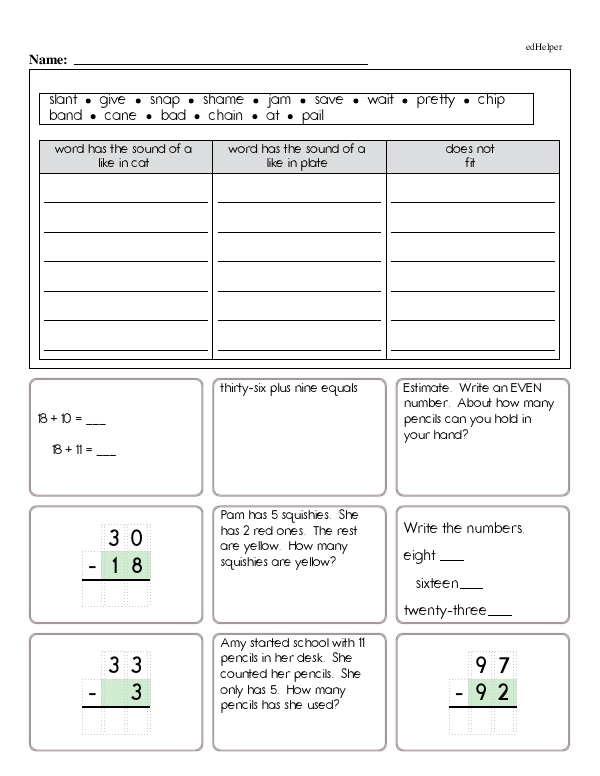
Each page of the worksheet titled "Recognizing Letter Sounds and Writing Words in a Table" features a word bank at the top. Down below is a blank table with three columns. Two columns give instructions to students about words, along with which letter sounds go in each column. The third column is reserved for words that don't fit.
For example, the first two columns might be "word has the sound of i like in lion" and "word has the sound of i like in bring." Students would fill in the word "five" from the word bank in the first column and "drip" from the word bank into the second column. The word "twelve" in the word bank would go in the "does not fit" column.
Each word bank contains 15 words with blank lines in each column where students can write each word.
Practicing letter sounds, especially letters that can sometimes have different sounds, is an important way to help students build confidence and accuracy in spelling, pronouncing, and reading words. It can be helpful to choose activities that are grounded in real-world experience.
For example, instead of asking students to identify AI words that sound like "ay" or "eh," ask them to categorize words together based on the sounds they make. For example, ask if a word like "rain" goes with the word "daisies" or "chair." They can make lists or plug different words in a word bank into a table according to the sounds they make.
Very young students can benefit from writing or seeing words written the way they sound. One fun activity could include revealing a secret message that is written phonetically. Students decode the phrase by writing each word's actual spelling to reveal the message.
Recognizing Letter Sounds and Writing Words in a Table
Recognizing Letter Sounds and Writing Words in a Table
GRADES: