The worksheet titled "Short and Long Vowel Practice: Cutting Out and Categorizing Words" asks students to categorize words based on whether they have short or long vowel sounds.
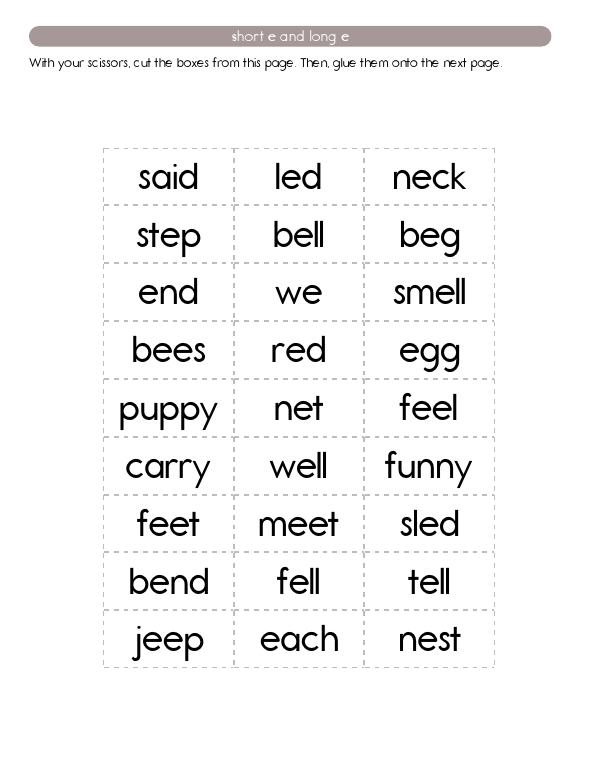
The first page of the activity features 27 words in dashed boxes. The instructions ask students to cut out each word and glue them onto the next page.
The next page features columns that are labeled with long or short vowel sounds. One example shows a picture of a bed with the short "e" sound and a picture of feet with the long "e" sound. Empty rectangles are included under each heading so students can see how many words go under each column.
Recognizing how the same vowels can make different sounds is important for reading, writing, and speaking skills. Students who know the different vowel sounds can better identify new words, read more challenging books, write more accurately, and speak more clearly.
Categorization activities lend themselves well to separating vowel sounds. For example, students can cut out words and categorize them into columns based on whether they make the short or long "a" sound. Students can fill in the correct vowel into words with blanks or draw lines between words and their vowel sounds. Once they have had practice, students could even come up with and write their own words in each column.
Short and Long Vowel Practice: Cutting Out and Categorizing Words
Short and Long Vowel Practice: Cutting Out and Categorizing Words
GRADES: