

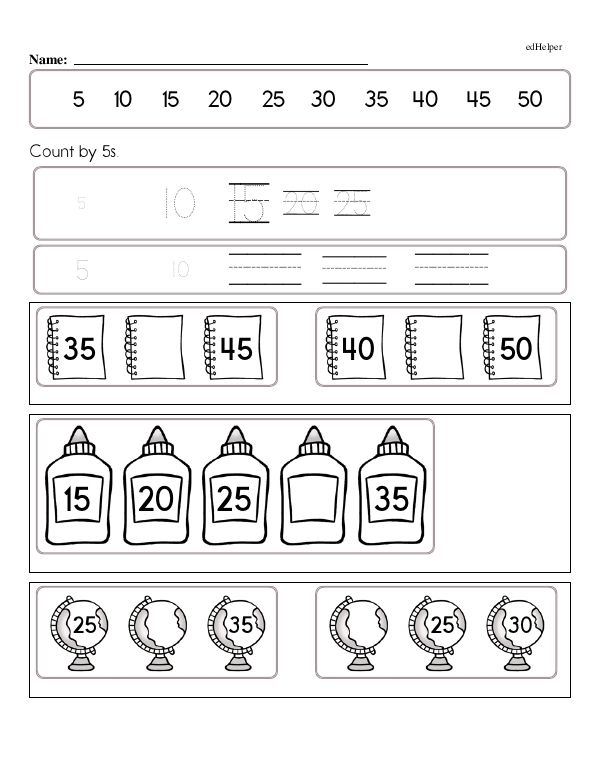
Students get to practice skip counting by fives on this worksheet. Sections include:
* Tracing the numbers 5, 10, 15, 20, 25.
* Tracing the numbers 5 and 10, then writing 15, 20, and 25 on the lines.
* Writing the missing number in a series of images, like writing the number 35 in a lightbulb when the first lightbulb is labeled 30 and the third lightbulb is labeled 40.
Each page displays the numbers from 5 to 50 in increments of 5 that students can reference when completing the worksheet. They also get to practice tracing and writing numbers in different sizes. This helps them work on their fine motor skills in addition to making the worksheet more engaging.
Learning to skip count is an important skill for students, especially learning to skip count by fives. Not only does it support multiplication skills, but it also helps students practice counting large numbers more quickly.
When students first start learning how to skip count, you can have them trace or write the numbers on a number line. Give them a number line they can reference if they need help. For example, they could trace the numbers 5 and 10, but then write the numbers 15, 20, and 25 in the blanks. You can display a number line that counts by fives on the board while they work.
Students who are more advanced can try counting by fives starting with different numbers, like starting with 30 instead of 5. They could fill the missing numbers on a number line. You can make it even trickier if you don't tell them what number they're skip counting by. So, they can see a series of numbers like 35, 40, ___, 50, and they have to figure out what to put in the blank based on the pattern they see.
Skip Counting by Five: Tracing and Writing Numbers
Skip Counting by Five: Tracing and Writing Numbers
GRADES:

Additional Educational Resources:
Numbers to 100 Large Workbook - (Grade 1)
Shapes and Patterns Large Workbook - (Grade 1)
Quick Assessment Pattern Playground - Numbers Sequences with Numbers 10 and below and Picture Patterns