

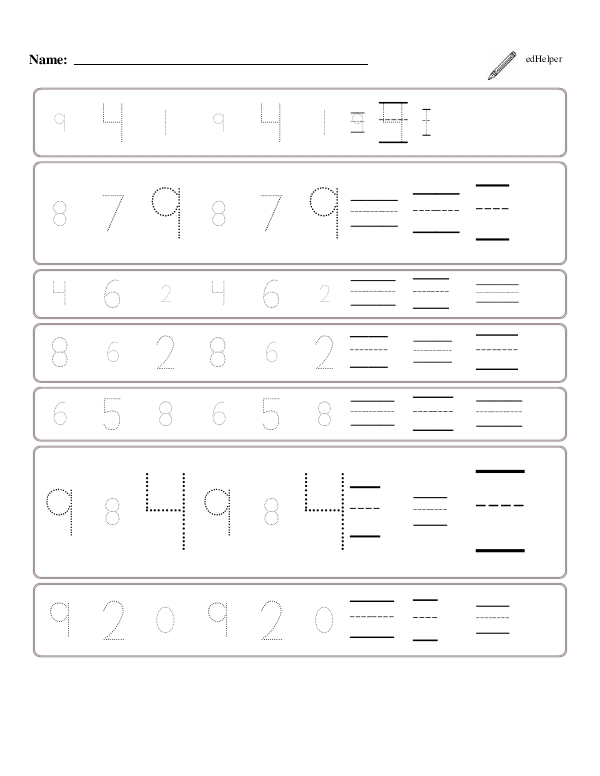
Students use their pattern recognition skills to finish the numerical pattern while tracing and writing numbers in different sizes on this worksheet.
Each page displays seven different 6-digit patterns. Each number in the pattern is comprised of dots that students have to trace. Then, they fill the final three digits on the blank lines at the end. For example, if the pattern is 8 3 1 8 3 1, students trace those numbers and then write 8 3 1 on the last three blank lines.
Students have an added challenge on this worksheet because the numbers and blank lines are different sizes. They must trace and write small, medium, and large numbers to complete the worksheet. The first line on each page gives them practice by showing the remaining three dotted numbers on the lines for them to trace before they finish the page.
Tracing numbers in a pattern and filling in the remaining numbers is a great way for students to practice pattern recognition and learn what comes next, which helps build more generalized math strategies that will come in handy later. Tracing numbers helps students practice writing and recognizing numbers, but it can also help with fine motor skill development.
Give students a series of numbers to trace and see if they can figure out what number comes next. You can add an extra challenge by having them trace numbers of different sizes. They can fill in the blanks in a series. You can challenge them to write the smallest number they can, or they can write the largest number they can that takes up an entire sheet of paper. They can also trace specific numbers on a number line, like even numbers or multiples of 5, so you can talk about patterns.
Write the Missing Numbers in a Pattern: Large and Small Handwriting Practice
Write the Missing Numbers in a Pattern: Large and Small Handwriting Practice
GRADES:

Additional Educational Resources:
Shapes and Patterns Large Workbook - (Grade 1)
Numbers to 1,000 Large Workbook - (Grade 2)
Quick Assessment - Geometry Challenge - Shapes, Flips, and Turns
Quick Assessment Pattern Playground - Numbers Sequences with Numbers 10 and below and Picture Patterns