edHelper.com
Immigration


Escaping Starvation in Holland


Escaping Starvation in Holland
Reading Level
     edHelper's suggested reading level:   grades 5 to 8
     Flesch-Kincaid grade level:   8.23

Vocabulary
     challenging words:    dogfight, malnutrition, occupation, combat, patriotism, aircraft, aerial, invasion, immigration, military, blackout, citizenship, starvation, carefree, northern, worthless
     content words:    Willem Van Belle, Burgemeester Kruiff Street, Kruiff Street, Jan Van Belle, Dutch National Anthem, New Amsterdam, Friesian Tail, Ellis Island, New York Harbor, Van Belle


Print Escaping Starvation in Holland
edHelper.com subscriber options:
     Print Escaping Starvation in Holland  (font options, pick words for additional puzzles, and more)

     Quickly print reading comprehension

     Print a proofreading activity


Feedback on Escaping Starvation in Holland
     Leave your feedback on Escaping Starvation in Holland  (use this link if you found an error in the story)


Escaping Starvation in Holland
By Joyce Furstenau
  

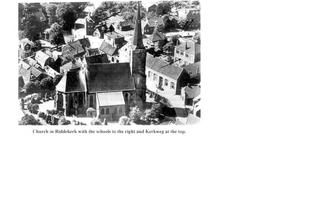
1     Holland is a region in northern Europe and is part of the Netherlands. Jan (pronounced Yawn) Willem Van Belle was born in October 1931 in Ridderkerk, Holland. He was the first-born boy, so custom demanded he be named after his father's father. Jan's father worked as a carpenter while his mother stayed at home to take care of her children. Jan remembers a simple and carefree life growing up in Holland. His family lived on a dead end street called Burgemeester Kruiff Street in a brick row house. A row house is simply a tight, long row of two story houses with little or no space between them. Jan remembers as a child being entertained by the arguments of his neighbors. His father would not allow a radio in the house, but Jan could hear the neighbors' radio playing after he went to bed at night.
 
2     It was hard to heat their entire house in the winter, so only a few rooms in the house were used when the weather turned cold. Jan and his family spent most of their time in the living room which held the stove, several closets, and their dining table. After dark, his mother would sing songs or tell the children stories until his father came home from work.
 
3     Jan attended an elementary school organized by the church. The school year began in May, with only a few weeks off for summer vacation. Jan remembers seeing Holland's large storks building nests on the rooftops of nearby buildings through the open windows of his classroom. Jan and his classmates lined up their wooden shoes outside the classroom and entered in stocking feet.
 
4     When he was old enough to begin high school, Jan was given special classes after school to prepare. Jan studied less than the others, so his teacher told him he probably would not pass the test. As it turned out, Jan was the only one who did.
 
5     By the time Jan entered high school, attendance was sporadic because of the Nazi occupation of Holland. Jan remembers being awoken on Friday morning, May 10, 1940, to his father's shouts, "The war has started!" Immediately after that, he heard bombs exploding near the Rotterdam airport. His breakfast on the day the war broke out in Holland was radishes and bread.
 
6     His father was called to city hall to help place "blackout curtains" on all the windows in the building. These curtains were put up over windows everywhere so the enemy could not locate buildings or other landmarks during a bombing attack.
 
7     Jan witnessed many "dogfights" in the air between the Dutch forces and the Nazis in the days that followed. A "dogfight" is close range aerial combat between military aircraft. Four days later, the Dutch government surrendered. By the end of the war, 205,900 Dutch men and women had died. Jan witnessed the entire invasion from his home on Kruiff Street. The truce was signed just a few miles from his home in Rysoord.
 
8     In the years that followed, life became much more difficult for the citizens of
 
9     Ridderkerk, including Jan Van Belle and his family. The first things to be rationed were bicycle tires and shoes. Food and supplies were rationed next, and each member of the family was given a ration card which allowed only so much meat, butter, and potatoes per person. The Nazis ordered all radios confiscated to prevent the Dutch citizens from learning about the Resistance forces. Money was worthless, and Jan and his family were hungry every day. Because his family had planted a garden, they were able to survive during this difficult time.

Paragraphs 10 to 16:
For the complete story with questions: click here for printable


Copyright © 2008 edHelper