edHelper.com
The 2000's
Europe Switches to the Euro


Europe Switches to the Euro
Reading Level
     edHelper's suggested reading level:   grades 5 to 8
     Flesch-Kincaid grade level:   8.93

Vocabulary
     challenging words:    historical, banking, traditional, colored, various, security, unit, see-through, travelers, design, identify, currency, rate, bridges, value, cash
     content words:    European Union, United Kingdom, Summer Olympics


Print Europe Switches to the Euro
     Print Europe Switches to the Euro  (font options, pick words for additional puzzles, and more)


Quickly Print - PDF format
     Quickly Print: PDF (2 columns per page)

     Quickly Print: PDF (full page)


Quickly Print - HTML format
     Quickly Print: HTML


Proofreading Activity
     Print a proofreading activity


Feedback on Europe Switches to the Euro
     Leave your feedback on Europe Switches to the Euro  (use this link if you found an error in the story)


Europe Switches to the Euro
By Sharon Fabian
  

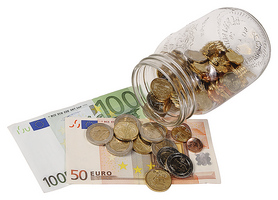
1     Shopping in Europe could be confusing. When someone from Spain wanted to shop in Italy, she needed Italian money, and she needed to know the value of the Italian bills and coins. When someone from Austria wanted to vacation in Greece, she needed to use Greek money. Visitors from America who wanted to visit more than one country had to use a different money system in each country they visited. There were Greek drachmas, Italian lira, Spanish pesetas, Austrian schillings, and more.
 
2     That was the way it used to be. Then in 2002, many countries of Europe made the big move. They changed once and for all to a common currency known as the euro.
 
3     The changeover had actually begun a few years earlier on January 1, 1999, when the euro was introduced as a unit of money for electronic transfers and banking business. Then on January 1, 2002, the euro was introduced as bills and coins.
 
4     The euro became the official currency of the European Union. It went into effect in most of the European Union countries, fifteen in all, as well as in other countries who were not members of the European Union.
 
5     In the countries that switched to the euro, people had about two months to exchange their old money for new money. By the end of February, the switch had been made. About 320 million Europeans now shopped and did business using only the euro. American travelers exchanged their dollars for euros, at the rate of about one and one half dollars for one euro, and spent them nearly all over Europe.

Paragraphs 6 to 12:
For the complete story with questions: click here for printable


Copyright © 2009 edHelper