

"Decode the Secret Number: Algebraic Foundations Puzzles" is a worksheet that features fun puzzle-like activities that help students get familiar with algebraic concepts, so tackling equations at higher grade levels is easier.
Each problem features a secret number. Every digit in the number is labeled with a letter. A string of numbers is listed next to the secret number, along with lettered clues that help students find the digit that goes in each labeled blank. For example, one clue might say, "b. fourth digit from the right." Students count four digits from the right in the string of numbers to find out which number goes in the blank that's labeled with a "b" in the secret number.
They write all the numbers in the blanks to find the secret number. Then, there are two equations below to help them double-check their answer. For example, students plug the value of "b" in the equation 5+___=10 to see if it's true.
The first secret number on each page has a few digits filled in already, so students can see how to do it. Then, they fill in all the blanks in subsequent problems. Each secret number ranges from 4 to 6 digits in length, and all equations feature addition.
Students find algebraic equations easier to solve in upper elementary and middle school when they have opportunities to practice algebraic concepts much earlier.
Practicing algebra in lower elementary school can be a lot of fun because it makes doing math feel a lot like doing a puzzle. For example, very young students can replace pictures with numbers when completing math problems. They can also complete an activity where they fill in the numbers that go with each letter according to the given clues.
You could even have students complete a short cryptogram. Then, they plug in the numbers into the equations below according to the value associated with each letter. This activity is fun, but it also gives students a chance to double-check their answers. If the cryptogram is readable, they know they associated the correct numbers with the correct letters before they complete the one-variable equations.
Decode the Secret Number: Algebraic Foundations Puzzles
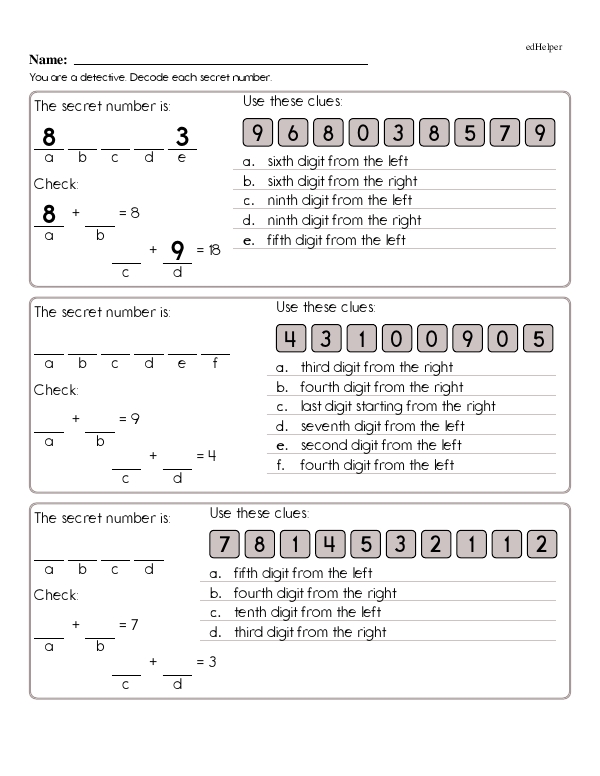
Decode the Secret Number: Algebraic Foundations Puzzles
GRADES:

Additional Educational Resources:
Addition and Subtraction to 40 Large Workbook - (Grade 1)
Addition Facts to 10 Large Workbook - (Grade 1)
Quick Assessment - Fun Mental-Math Workbook in Easy Addition
Quick Assessment - Place Value and Large Numbers: Quick Drills to Master BIG Numbers