The worksheet titled "Early Writing Practice Activity: Letter Tracing, Identification, and Writing Letters" contains different ways for students to get early writing practice. Activities include:
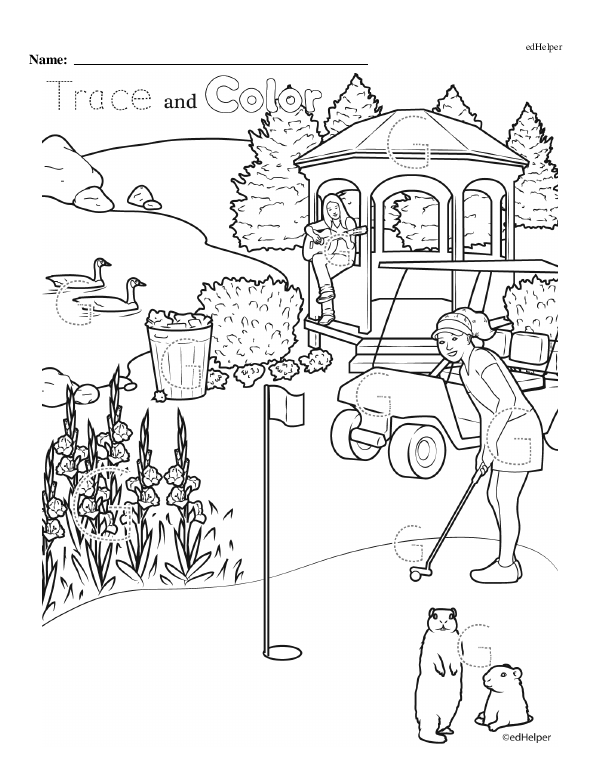
* Trace the letters in corresponding images and then color the pictures.
* Trace a letter multiple times that matches a single image that students can color.
* Pages where the same letter is repeated with a starting star for students to trace.
* Trace dotted lines to complete a picture, like tracing the outline of a police officer.
* Trace the letters and numbers in a grid and then write the same letters and numbers in a blank grid.
* Color the target letter in a grid of mixed-up letters, like coloring all the squares with "P" and "p".
* Color some animals one color and other animals another color in a picture with many images.
Trace and color pages are labeled as such so students know what to do. Other pages show examples, arrows, crayons, pencils, and stars when tracing letters to help students get started.
There are many ways for students to get early writing practice. The more you vary the activities, the more likely they are to remain engaged so they get the practice they need.
For example, you might have students practice writing a letter on one page, but then on the next page, they can circle the pictures that start with that letter. Students could write the starting letter for the items they see in an image before coloring them, like writing "E" on an elephant before coloring it gray.
Fine motor skill activities can help students become better writers by giving them practice holding and using a pencil. They can connect the dots, finish symmetrical shapes, or complete a maze.
Including pictures on pages is an easy way to make activities more interactive. They can color the pictures, or you can ask students to help illustrate the activity by drawing their own matching picture.
Early Writing Practice Activity: Letter Tracing, Identification, and Writing Letters
Early Writing Practice Activity: Letter Tracing, Identification, and Writing Letters
GRADES: