

Students will have fun practicing their subitizing and composing skills with this worksheet because each page features groups of cute critters and other objects!
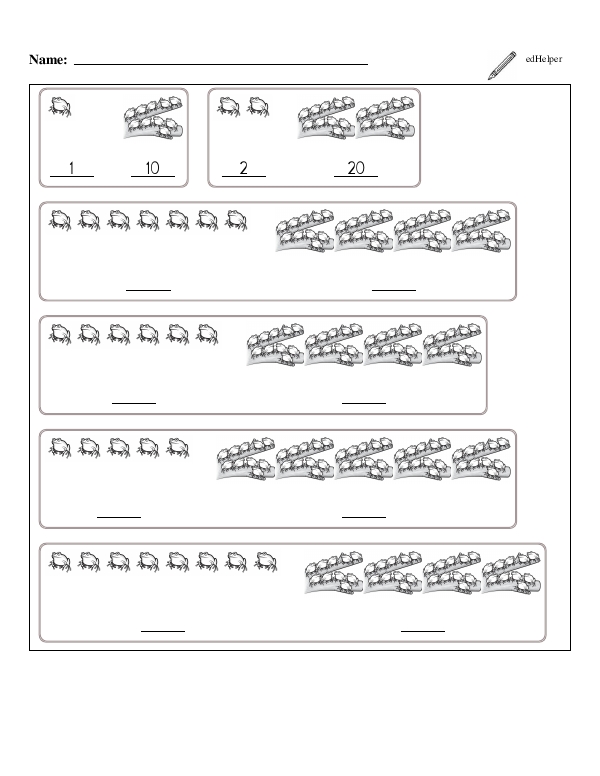
Kindergarten pages focus on counting individual groups of animals. For example, one square might feature 5 individual frogs and two groups of 10 frogs on logs. Students write "5" on the line below the individual frogs and "20" on the line below the groups of frogs. First grade pages ask students to do the same thing, but they also ask students to combine the two numbers to get one final number. So, they would put "20" and "5" together and write "25" on the line.
Each page includes the same kind of critter or object, but they can vary page by page. For example, one page might feature cats while another page features crayons. Pages also include multiple sections that are grouped within a rectangle so students can see each individual problem clearly.
Seeing math visually helps support mental math skills, as students can count or add without having to count one by one. You can have students practice with ten frames, but they can practice with a wide variety of objects. For example, they can write the number on dice, add up the dots on dominoes, or count up groups of animals, like cats on a worksheet.
Repetition is key, as students will be tempted to count each individual item at first, but with enough practice, they will begin to group items together. As they get more proficient, you can encourage them to count by certain groupings. You can show pairs so students count by twos or bundles of five sticks to encourage them to count by fives.
Subitizing and Composing: Counting Groups of Cute Critters and Objects
Additional Educational Resources:
Numbers to 100 Large Workbook - (Grade 1)
Mental Math Strategies Large Workbook - (Grade 1)
Subitizing and Composing: Counting Groups of Cute Critters and Objects
GRADES:


Additional Educational Resources:
Numbers to 100 Large Workbook - (Grade 1)
Mental Math Strategies Large Workbook - (Grade 1)