edHelper.com
What Eggs-actly Is Egg Tempera?


What Eggs-actly Is Egg Tempera?

A Short Reader

Reading Level
     edHelper's suggested reading level:   grades 4 to 6
     Flesch-Kincaid grade level:   6.23

Vocabulary
     challenging words:    modern-day, pigment, yolk, painting, ingredient, binding, hatching, term, artists, durable, certain, often, such, result, agent, during
     content words:    Modern Art, Middle Ages, Andrew Wyeth, New York City


Print What Eggs-actly Is Egg Tempera?
     Print What Eggs-actly Is Egg Tempera?  (font options, pick words for additional puzzles, and more)


Quickly Print - PDF format
     Quickly Print: PDF (2 columns per page)

     Quickly Print: PDF (full page)


Quickly Print - HTML format
     Quickly Print: HTML


Proofreading Activity
     Print a proofreading activity


Feedback on What Eggs-actly Is Egg Tempera?
     Leave your feedback on What Eggs-actly Is Egg Tempera?  (use this link if you found an error in the story)


What Eggs-actly Is Egg Tempera?
By Colleen Messina
  

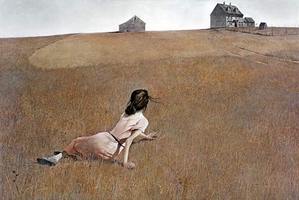
1     Caption: Andrew Wyeth's egg tempera painting "Christina's World." Painted in 1948 and later purchased by the Museum of Modern Art, this is one of the most recognized paintings in American art.
 
2     Eggs are an ingredient in lots of recipes, from tasty birthday cakes to fragrant egg rolls. Did you know that eggs are also an ingredient in one type of paint? Egg tempera is a kind of paint that has been used for centuries. Today, the term "tempera" sometimes refers to a different type of paint called poster paint, but this kind of paint is not related to egg tempera. So what eggs-actly is egg tempera paint?
 
3     Many European artists used egg tempera paint during the Middle Ages and even before that. They made their own paint. They hand-ground dry powdered pigments into egg yolk. The egg yolk acted as a binding agent. It made the pigment particles stick together. The yolk also made the finished paint stick to a surface. Sometimes, artists added other things to the paint, such as honey, water, and casein, a part of milk. They also added different plant gums. The result was a durable, quick-drying paint.

Paragraphs 4 to 6:
For the complete story with questions: click here for printable


Copyright © 2009 edHelper