edHelper.com
How Do Submarines Work?


How Do Submarines Work?

A Short Reader

Reading Level
     edHelper's suggested reading level:   grades 4 to 6
     Flesch-Kincaid grade level:   5.54

Vocabulary
     challenging words:    conning, submarine, equipment, density, angles, easily, lighter, battery, rudder, boat, business, steel, glide, flow, surface, power


Print How Do Submarines Work?
     Print How Do Submarines Work?  (font options, pick words for additional puzzles, and more)


Quickly Print - PDF format
     Quickly Print: PDF (2 columns per page)

     Quickly Print: PDF (full page)


Quickly Print - HTML format
     Quickly Print: HTML


Proofreading Activity
     Print a proofreading activity


Feedback on How Do Submarines Work?
     Leave your feedback on How Do Submarines Work?  (use this link if you found an error in the story)


How Do Submarines Work?
By Cindy Grigg
  

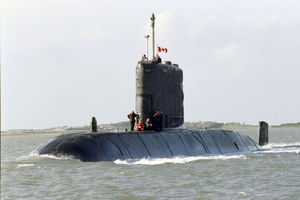
1     A submarine is a kind of boat that can go under the water. It is shaped like a cylinder (think soda can) with rounded ends. This shape helps it glide easily and quickly under the water. There's a tall tower in the middle. Sometimes it is called the conning tower or the sail. It carries the navigational equipment. A submarine has small fins at the side near the back. They are called hydroplanes. The fins can be turned at different angles. This aims the flow of water and helps the sub turn in the water.
 
2     To dive under the water, a sub must have more density than the water. It does this by taking on more water. It has ballast tanks to hold ocean water or air. A sub dives by filling its ballast tanks with water. Filling the tanks with water makes the sub heavier. It can then submerge into the water.
 
3     When the sub wants to surface, air is blown into the ballast tanks. This forces the water out into the ocean. Filling the tanks with air makes the sub lighter. The sub now has less density than the water. It can float to the surface.

Paragraphs 4 to 5:
For the complete story with questions: click here for printable


Copyright © 2009 edHelper