edHelper.com
Dall Sheep


Dall Sheep

A Short Reader

Reading Level
     edHelper's suggested reading level:   grades 4 to 5
     Flesch-Kincaid grade level:   4.46

Vocabulary
     challenging words:    striking, retreat, environment, lichen, substance, mainly, actually, easily, northwestern, rough, allow, mountain, slender, pads, trouble, appear
     content words:    William Dall


Print Dall Sheep
     Print Dall Sheep  (font options, pick words for additional puzzles, and more)


Quickly Print - PDF format
     Quickly Print: PDF (2 columns per page)

     Quickly Print: PDF (full page)


Quickly Print - HTML format
     Quickly Print: HTML


Proofreading Activity
     Print a proofreading activity


Feedback on Dall Sheep
     Leave your feedback on Dall Sheep  (use this link if you found an error in the story)


Dall Sheep
By Sheri Skelton
  

1     The mountain ranges of Alaska and northwestern Canada are a good home for Dall sheep. These sheep like living in an area that consists of meadows and steep, rocky slopes. These slopes offer a way of escaping from predators. Dall sheep eat plants in the meadows. When predators appear, the Dall sheep quickly retreat to the rugged slopes. Dall sheep have special pads on their hooves. The pads are rough and allow the sheep to easily climb on rough ground.
 
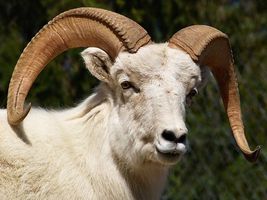
2     Dall sheep were named after American naturalist William Dall. Sometimes the sheep are called Dall's sheep. They have furry coats that may be white, brown, or gray. The hairs of their coats are hollow. These hollow hairs help to keep the sheep warm.
 
3     Dall sheep have curling horns that are quite striking. The males, or rams, have thick horns. The females, or ewes, have shorter and more slender horns. The horns of Dall sheep grow during the spring, summer, and fall. When winter comes, the horns stop growing. Once spring comes, the horns start growing again. The stopping and starting of the growing causes the horns to develop a pattern of rings. The rings are called annuli. You can tell how old a Dall sheep is by counting the annuli. The horns are made out of keratin. This is the same substance that human fingernails are made of.

Paragraphs 4 to 5:
For the complete story with questions: click here for printable


Copyright © 2009 edHelper