edHelper.com
A New Nation
(1776-1830)


Sequoyah


Sequoyah
Reading Level
     edHelper's suggested reading level:   high interest, readability grades 5 to 6
     Flesch-Kincaid grade level:   5.32

Vocabulary
     challenging words:    writing, focus, better, traveled, skilled, tribal, press, death, master, trader, history, birth, during, possible, often, craftsman
     content words:    Native Americans, George Gist, Many Cherokee, Cherokee Phoenix, Native American, United States, Cherokee Nation


Print Sequoyah
edHelper.com subscriber options:
     Print Sequoyah  (font options, pick words for additional puzzles, and more)

     Quickly print reading comprehension

     Print a proofreading activity


Feedback on Sequoyah
     Leave your feedback on Sequoyah  (use this link if you found an error in the story)


Sequoyah
By Cathy Pearl
  

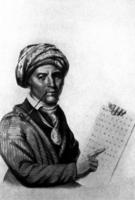
1     In the 1800s, many Native Americans were forced to move from their lands. Many people did not want this to happen and tried to prevent it. Others tried to help the Native Americans adapt to what the settlers did. This would help them to fit in better. Sequoyah was one man who helped to change the lives of the Cherokee.
 
2     Sequoyah was born in the 1760s. His mother was a Cherokee. His father was a white fur trader. His name is Cherokee for pig's foot. He may have been named that for a birth defect called clubfoot. This is where the front part of the foot is twisted out of place. This did not stop him.
 
3     Sequoyah was raised to respect the way that Cherokee lived. He also learned to be a hunter and a fur trader like his father was. There is no proof that he ever met his father, but later in life he would go by the English name that he gave him: George Gist.
 
4     He studied and became a skilled silver craftsman. He could not sign his work, as there was no writing system in the Cherokee language. This may have started the idea of a writing system for the Cherokee.
 
5     The War of 1812 may also have pushed Sequoyah into making an alphabet for the Cherokee. During the war, the Cherokee would often see soldiers writing letters to friends and families. The Cherokee had no way to do this.

Paragraphs 6 to 15:
For the complete story with questions: click here for printable


Copyright © 2008 edHelper