edHelper.com
Earth
Changing the Earth's Crust


Changing the Earth's Crust
Reading Level
     edHelper's suggested reading level:   grades 3 to 5
     Flesch-Kincaid grade level:   3.65

Vocabulary
     challenging words:    erosion, opening, pothole, rainwater, rushing, material, earth, underwater, underground, layer, easily, ashes, pavement, lava, roots, acid
     content words:    Hawaiian Islands, Pacific Ocean


Print Changing the Earth's Crust
     Print Changing the Earth's Crust  (font options, pick words for additional puzzles, and more)


Quickly Print - PDF format
     Quickly Print: PDF (2 columns per page)

     Quickly Print: PDF (full page)


Quickly Print - HTML format
     Quickly Print: HTML


Proofreading Activity
     Print a proofreading activity


Feedback on Changing the Earth's Crust
     Leave your feedback on Changing the Earth's Crust  (use this link if you found an error in the story)


Changing the Earth's Crust
By Cindy Grigg
  

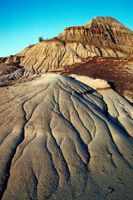
1     The earth is very old. It has changed as time passed. The outer layer of the earth is called the crust. The earth's crust is made of rocks and soil. Rocks crumble and wear away. When rocks break down, they weather. Most rocks weather very slowly over many years. Weathering happens in several different ways.
 
2     Freezing water weathers rock. When you look at a rock, you see many tiny cracks and holes in it. When it rains or snows, water fills these holes and cracks. The water freezes and pushes against the rock. The rock slowly breaks apart. Over many years, the water causes rock to break into small pieces and form soil. You may have seen potholes in streets or roads. A pothole forms when water freezes in cracks in the pavement. As the water freezes, it gets bigger. It pushes against the cracks and makes a hole in the pavement.
 
3     Plants also help to weather rocks. Soil can collect in the cracks of a rock. Plants can grow in this soil. Then plant roots can break rocks apart. Over many years, the roots can help crumble a large rock. Tree roots can break a boulder apart.
 
4     Sometimes, rainwater and gases in the air can weather rocks. Carbon dioxide is a gas in the air. It can mix with rain to form a new material that is an acid. This acid can make hard minerals in rocks soft. Then the rocks slowly break apart. This type of weathering is called chemical weathering. Rainwater can eat away the minerals in rocks. This can make hollow spaces. Big hollow spaces in underground rocks are underground caverns called caves.

Paragraphs 5 to 12:
For the complete story with questions: click here for printable


Copyright © 2009 edHelper