edHelper.com
What Is Scrapbooking?


What Is Scrapbooking?
Reading Level
     edHelper's suggested reading level:   grades 4 to 7
     Flesch-Kincaid grade level:   7.11

Vocabulary
     challenging words:    appendix, autism, inspiration, phenomenal, philosopher, philosophy, worldwide, directly, responsibility, diagnosis, entire, album, presidency, scheme, snazzy, teaching
     content words:    Poor Aunt, William Granger, President Thomas Jefferson, Mark Twain, Montgomery Ward, Wouldn't Mr


Print What Is Scrapbooking?
     Print What Is Scrapbooking?  (font options, pick words for additional puzzles, and more)


Quickly Print - PDF format
     Quickly Print: PDF (2 columns per page)

     Quickly Print: PDF (full page)


Quickly Print - HTML format
     Quickly Print: HTML


Proofreading Activity
     Print a proofreading activity


Feedback on What Is Scrapbooking?
     Leave your feedback on What Is Scrapbooking?  (use this link if you found an error in the story)


What Is Scrapbooking?
By Colleen Messina
  

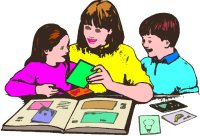
1     Some people think that keeping track of photographs is a chore. As much as they might like taking a picture of Aunt Edna's wrinkly, toothless smile, they might not know where to put the photograph later. Poor Aunt Edna's picture ends up in a dusty pile in the closet. For others, though, preserving pictures and other memorabilia is an art form. These people love creating scrapbooks to record the extraordinary events of their lives.
 
2     A scrapbook is an album that has photographs, notes, and pictures in it. It can also include newspaper clippings or other objects. A scrapbook starts out as a book of blank pages. It turns into a place to preserve a person's memories in a colorful way. Creative scrapbookers might take Aunt Edna's photograph and dress it up with a pink border. They could even add put a funny story from her life beside it (like the day she got dentures).
 
3     Scrapbooking may seem like a modern hobby, but using notebooks to keep track of events may have begun in ancient Greece. The great philosopher, Aristotle, encouraged his pupils to keep notebooks. They kept track of their great debates. A debate is an argument that stays polite! Aristotle and his students had lively discussions about philosophy, religion, and government. During the Renaissance, people became interested in the ancient Greeks. They adopted the Greek concept of preserving thoughts in a notebook. People began using blank notebooks to copy down pretty poems or snazzy quotes.
 
4     In 1769, a man named William Granger took the idea of notebooks one step further. He published a book that had an appendix with illustrations. Later, his book had extra blank pages. His readers could put their own illustrations, prints, or letters on these pages. Books with blank pages were the inspiration for modern scrapbooks. President Thomas Jefferson liked to collect newspaper clippings in albums during his presidency. He enjoyed being a "scrapper."

Paragraphs 5 to 11:
For the complete story with questions: click here for printable


Copyright © 2009 edHelper