edHelper.com
Immigration


Escaping Terrorism in the Philippines


Escaping Terrorism in the Philippines
Reading Level
     edHelper's suggested reading level:   grades 5 to 8
     Flesch-Kincaid grade level:   9.25

Vocabulary
     challenging words:    denial, establishment, gangs, ransom, tourist, ambush, provided, immigration, recollection, criminal, behalf, various, successful, social, citizenship, wealthy
     content words:    Southeast Asia, During World War II, United States, Thomas Aganda, Judy Chua, Quezon City, On Jun, Washington State, In October, In March


Print Escaping Terrorism in the Philippines
edHelper.com subscriber options:
     Print Escaping Terrorism in the Philippines  (font options, pick words for additional puzzles, and more)

     Quickly print reading comprehension

     Print a proofreading activity


Feedback on Escaping Terrorism in the Philippines
     Leave your feedback on Escaping Terrorism in the Philippines  (use this link if you found an error in the story)


Escaping Terrorism in the Philippines
By Joyce Furstenau
  

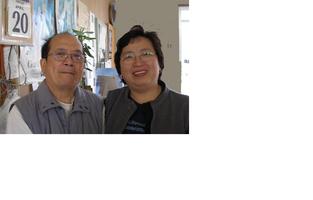
1     The Republic of the Philippines is an island off the coast of Southeast Asia. It has two main seasons of the year: wet and dry. During World War II, it was invaded and occupied by Japan. After the Japanese were defeated in 1945, the Philippines achieved independence from the United States on July 4, 1946. Since that date, this independent country has faced many political problems with various dissident groups. Manila is the capital of the Philippines and the city in which Thomas Aganda and Judy Chua grew up. They both lived in an outlying area called Quezon City.
 
2     Thomas Aganda did not have an easy life as a child. His family was poor, and Thomas says he does not remember much of his childhood. His only recollection of having fun as a child was playing with a neighbor boy. Thomas said of his youth, "I did not taste my childhood like American children do." When he was old enough, Thomas went to work as a street vendor, selling fruits and vegetables to help out his family. He attended public schools in Quezon.
 
3     Judy was more fortunate. She was born into a wealthy family who were fish brokers. That means they sold large quantities of fish to other countries or large companies. Judy was able to attend private schools in Quezon. She had fond memories of her childhood in Quezon. She remembers roller skating on the streets and even dancing while on roller skates.
 
4     Judy and Thomas were introduced by a family friend and quickly fell in love. After they were married, they worked hard to create a living for their young family. Thomas and Judy opened a garment-processing factory in Manila which provided them with a nice living. They purchased a home, and their three children, Herbie, Khimson, and Jennylyn were born there. Thomas and Judy were, by all accounts, very successful and happy.
 
5     Judy's mother, grandmother, and aunts had immigrated to America years earlier, and the Agandas visited Judy's family here as often as they could. In 1984 when Judy was expecting their fourth child, the Agandas came for one of their regular visits. Judy developed some health problems, and the doctors told her she needed to stay in the United States until after the baby was born. Thomas went home to work in his factory, and Judy stayed with her mother. On Jun 15, 1984, their daughter, Stephanie, was born in Yakima, Washington. Because she was born in the United States, Stephanie was born a U.S. citizen. They did not realize it, but this would play an important role in their lives.
 
6     Around this time, one of the terrorist groups started threatening Thomas. These powerful gangs were known to kidnap and hold people for ransom. Thomas knew they meant business, and he feared for his life and that of his family. They had already kidnapped one of his brothers. More than two hundred and fifty thousand dollars in ransom money was paid to the terrorists to get him back. After Jennylyn's godfather was killed in an ambush, believed to have been committed by this gang of dissidents, Thomas and Judy knew it was time to leave.
 
7     Judy's mother and grandmother still lived in Washington State. Her aunts and sisters were also here. Fearing for their own lives and the lives of their family, in May of 1990, Judy and Thomas arranged for tourist visas and took their three children to stay with their grandmother who lived in Yakima, Washington.
 
8     Thomas, Judy, and two-year-old Jennylyn then went back to Manila. The Agandas began selling off their factory, home, and all their possessions in preparation for their immigration to America. In October 1990, they applied for visitors' visas, said goodbye to their friends one last time, and boarded a plane bound for America.

Paragraphs 9 to 17:
For the complete story with questions: click here for printable


Copyright © 2008 edHelper