edHelper.com
The 1890's


Another Day Older and Deeper in Debt: Working for a Living in the 1890s, Part 2


Another Day Older and Deeper in Debt: Working for a Living in the 1890s, Part 2
Reading Level
     edHelper's suggested reading level:   grades 6 to 8
     Flesch-Kincaid grade level:   5.28

Vocabulary
     challenging words:    brawny, breakers, forged, dynamite, backbreaking, devastation, outcry, posing, fuse, reopened, unemployment, radical, mines, rates, undergo, feat
     content words:    Saint Peter, Merle Travis, Sixteen Tons, North Idaho, Charlie Siringo, Norman Willey, Northern Idaho, White House, Idaho National Guard, Idaho State Prison


Print Another Day Older and Deeper in Debt: Working for a Living in the 1890s, Part 2
edHelper.com subscriber options:
     Print Another Day Older and Deeper in Debt: Working for a Living in the 1890s, Part 2  (font options, pick words for additional puzzles, and more)

     Quickly print reading comprehension

     Print a proofreading activity


Feedback on Another Day Older and Deeper in Debt: Working for a Living in the 1890s, Part 2
     Leave your feedback on Another Day Older and Deeper in Debt: Working for a Living in the 1890s, Part 2  (use this link if you found an error in the story)


Another Day Older and Deeper in Debt: Working for a Living in the 1890s, Part 2
By Toni Lee Robinson
  

1     
I was born one mornin' when the sun didn't shine;
I picked up my shovel and I walked to the mine.
I loaded sixteen tons of number nine coal
And the straw boss said "Well, a-bless my soul."

You load sixteen tons, what do you get?
Another day older and deeper in debt.
Saint Peter don't you call me 'cause I can't go;
I owe my soul to the company store.
~(From the song "Sixteen Tons" by Merle Travis)

 
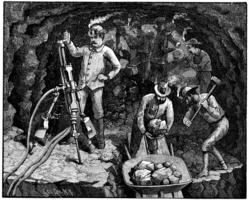
2     The song Sixteen Tons was written about coal miners. It speaks of the miners' plight-being hungry and poor in spite of a life spent in backbreaking work. It could have been the theme song of many workers during the 1890s. Many saw the union as the only hope of a better life. Only by sticking together could they force employers to treat workers more fairly. On the other side, big companies weren't budging from their stand. Neither workers nor unions, they declared, had the right to impose limits on free enterprise.
 
3     In 1892, the rail companies raised their shipping rates. Shipping costs were part of the expense of producing silver in North Idaho. After it was mined, the silver ore was sent by rail to smelters back east. Higher rates meant less profit for owners. News of the rate hikes sent mine owners through the roof. Mine companies in the Coeur d'Alene announced a four-month shutdown of the mines. The closure's purpose, they said, was to make a statement. The railroad would lose out on a hefty chunk of income. Rail companies might be persuaded to keep rates low.
 
4     Of course, the closing also affected workers. Most miners' families barely had enough to live on as it was. There were no savings accounts to fall back on when there was no work. Unemployment insurance was, at the time, no more than a dream. As the weeks without paychecks wore on, the outlook became grim. Miners believed owners were trying to starve out their union-making workers so desperate they would agree to anything.
 
5     Finally, the mines reopened. The companies had won the fight with the railroad. Shipping rates had been cut back. But when workers returned to the mines, they found their wages had also been cut-by about 20%. That day, families heard the thump-thump of heavy boots marching back down the wooden sidewalks long before their men should have quit for the day. The sound was like the rumble of thunder before a storm. The workers had rebelled. They refused to accept the pay cut. The union had declared a strike.

Paragraphs 6 to 15:
For the complete story with questions: click here for printable


Copyright © 2008 edHelper