edHelper.com
Thanksgiving


Six Thanksgiving Myths


Six Thanksgiving Myths
Reading Level
     edHelper's suggested reading level:   grades 5 to 7
     Flesch-Kincaid grade level:   6.77

Vocabulary
     challenging words:    beige, spanned, digest, gratitude, stylish, celebration, spectacular, bountiful, tribe, lasted, barley, during, however, remain, actually, fact
     content words:    Abraham Lincoln, Thanksgiving Proclamation, President Franklin D., Middle East, Middle Ages, Saint Martin, Calorie Control Council, Thanksgiving Day


Print Six Thanksgiving Myths
edHelper.com subscriber options:
     Print Six Thanksgiving Myths  (font options, pick words for additional puzzles, and more)

     Quickly print reading comprehension

     Print a proofreading activity


Feedback on Six Thanksgiving Myths
     Leave your feedback on Six Thanksgiving Myths  (use this link if you found an error in the story)


Six Thanksgiving Myths
By Colleen Messina
  

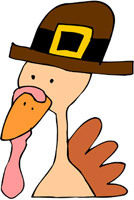
1     When you think of the first Thanksgiving, you might have a vision of Pilgrims in black outfits munching on turkey legs. Many ideas that we have about the first Thanksgiving are not correct. An idea that is not true is sometimes called a myth. Here are some Thanksgiving myths for you to digest.
 
2     Myth #1: The Pilgrims wore black and white outfits, buckles, and pointed hats. Pilgrims did wear black when they went to church on Sunday, but they did not wear black for the first Thanksgiving feast. The men probably wore tan, green, brown, and beige, while the women usually wore red, deep green, and gray. And they weren't quite as stylish as some people think because they didn't have any buckles on their shoes. Buckles didn't appear on the fashion scene until the late 17th century.
 
3     Myth #2: Thanksgiving always was in November. The Pilgrims had their first feast sometime between September 21 and November 11. The weary Pilgrims did take a spectacular break from their busy schedule. The dinner lasted for three whole days! The Pilgrims probably remembered their old English harvest festivals on this special day. These festivals were usually on September 29.

Paragraphs 4 to 8:
For the complete story with questions: click here for printable


Copyright © 2008 edHelper