edHelper.com
The 1980's


Breakers Break Into Dance


Breakers Break Into Dance
Reading Level
     edHelper's suggested reading level:   grades 5 to 7
     Flesch-Kincaid grade level:   6.84

Vocabulary
     challenging words:    acrobatics, bandanas, gangs, kung, rhythmic, pose, suicide, popularity, showcase, provided, prevalent, strenuous, swipe, coordination, nylon, handstand
     content words:    DJ Kool Herc, United States, In South Korea


Print Breakers Break Into Dance
edHelper.com subscriber options:
     Print Breakers Break Into Dance  (font options, pick words for additional puzzles, and more)

     Quickly print reading comprehension

     Print a proofreading activity


Feedback on Breakers Break Into Dance
     Leave your feedback on Breakers Break Into Dance  (use this link if you found an error in the story)


Breakers Break Into Dance
By Jane Runyon
  

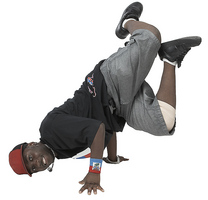
1     It all began in the 1970's. Legends of this craze say it all began with a street corner DJ named DJ Kool Herc. He would take breakdown rhythm elements of several songs, string them together, and provide a base for street dancers to display their talents. Because of the rhythmic mixes, the dancers became known as breakers. Spectators said that they were b-boying or b-girling. That came to be known as breaking or breakdancing.
 
2     The popularity of breakdancing spread through the streets of large cities. By the 1980's, it hit its peak. In areas where gangs were prevalent, breakdancing became one of the means used to settle arguments over who should be allowed in certain areas. Dancers from the rival gangs would perform their feats of rhythm and acrobatics. The gang with the better breakdancers was given reign over the questioned area or turf. It was less violent than fighting with each other. Many lives were spared by this contest.
 
3     Breakdancing consists of several different elements. Generally speaking, a dancer will begin by doing steps while standing up on his or her feet. The dancer is able to show coordination, flexibility, style, and rhythm in these steps. These standing steps are called toprock. These steps help the dancer warm-up before the really strenuous dancing begins.
 
4     The dancer then moves to the downrock steps. These steps are usually done with the dancer's hands and feet on the ground. The steps start getting faster. They also become more complicated.
 
5     Next, the dancer moves on to the power moves. The dancer must possess strength, particularly in the upper body, to perform these moves. Examples of power moves have been named the windmill, swipe, and flare. These moves combine elements found in gymnastics with moves from the martial arts, especially kung fu.

Paragraphs 6 to 11:
For the complete story with questions: click here for printable


Copyright © 2008 edHelper