edHelper.com
How Do Light Bulbs Work?


How Do Light Bulbs Work?
Reading Level
     edHelper's suggested reading level:   grades 4 to 6
     Flesch-Kincaid grade level:   5.25

Vocabulary
     challenging words:    fluorescent, electrical, lights, ever, practical, curly, kinds, early, thousand, tested, base, switch, breathe, lived, react, although
     content words:    Thomas Edison, New York City, Electric Power Company


Print How Do Light Bulbs Work?
     Print How Do Light Bulbs Work?  (font options, pick words for additional puzzles, and more)


Quickly Print - PDF format
     Quickly Print: PDF (2 columns per page)

     Quickly Print: PDF (full page)


Quickly Print - HTML format
     Quickly Print: HTML


Proofreading Activity
     Print a proofreading activity


Feedback on How Do Light Bulbs Work?
     Leave your feedback on How Do Light Bulbs Work?  (use this link if you found an error in the story)


How Do Light Bulbs Work?
By Cindy Grigg
  

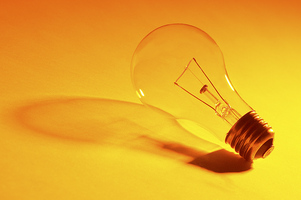
1     Have you ever looked closely at a light bulb? At the bottom, there's the bulb base. It has screw threads so it can be screwed into the light socket. At the very end, there's a little bump. This makes contact with the electrical wires. The wires bring electricity to the bulb. When the bulb is screwed in and the light switch is turned on, electricity flows into the bulb.
 
2     Inside the glass bulb, there are glass rods coming up from the bulb base. There are tiny wires coming up from each side. At the top of these wires, a curly wire filament connects the two wires across the top. This curly wire filament is made of tungsten. Inside the glass bulb (although you can't see it) is a kind of gas. It isn't just the air we breathe. Air we breathe has oxygen in it. Oxygen will burn. The gas inside a light bulb is an inert gas. An inert gas will not burn or react in any way. Argon is the kind of gas used in most light bulbs.
 
3     When electricity flows into the bulb, it heats the tungsten wire filament. The filament gets so hot that it glows with white light -- about 4,500 degrees! After some time, the high heat causes the filament to break. Now the light bulb is "burnt out." Sometimes you can see the broken filament inside the burned out bulb.

Paragraphs 4 to 6:
For the complete story with questions: click here for printable


Copyright © 2009 edHelper