edHelper.com


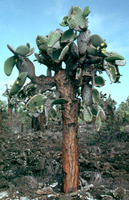
The Galapagos Islands


The Galapagos Islands
Reading Level
     edHelper's suggested reading level:   grades 6 to 8
     Flesch-Kincaid grade level:   9.74

Vocabulary
     challenging words:    evolution, further, formation, iguana, selection, elsewhere, response, vegetation, extremely, mainland, publication, considerable, natural, hinder, hardship, theory
     content words:    Galapagos Islands, Guh LAH, Enchanted Islands, Islas Galápagos, Charles Darwin, HMS Beagle, In South America


Print The Galapagos Islands
edHelper.com subscriber options:
     Print The Galapagos Islands  (font options, pick words for additional puzzles, and more)

     Quickly print reading comprehension

     Print a proofreading activity


Feedback on The Galapagos Islands
     Leave your feedback on The Galapagos Islands  (use this link if you found an error in the story)


The Galapagos Islands
By Cindy Grigg
  

1     The Galapagos Islands (Guh LAH puh goess) are a group of thirteen islands lying six hundred miles west off the coast of Ecuador. They were first called the "Enchanted Islands" by early Spanish explorers. The land mass is approximately three thousand square miles. They are one of the most active volcanic sites in the world. In 1892 the Enchanted Islands were renamed Archipiélago de Colón or Islas Galápagos by Ecuador which had annexed the islands in 1832. Either name or both may appear on a map. But most people still call them Galapagos, the Spanish word describing the tortoises that live on the islands.
 
2     The Galapagos Islands are most famous for being the object of Charles Darwin's study of their unique plants and wildlife. In 1835, the young Charles Darwin came to the islands on the HMS Beagle. The Beagle visited the islands for five weeks. Darwin visited at least four of the islands. He collected and classified plant and animal specimens. Darwin wrote about the giant tortoises the islands were named for and the differences he saw among them. Darwin wondered what could account for such an odd assortment of creatures in the Galapagos and the subtle and sometimes stark differences in some species. He puzzled over these questions, and his observations and notes led to the formation of the theory of evolution by natural selection. He published his theory and comments about these strange islands in 1859 in his book On the Origin of Species. In the almost one hundred fifty years since the publication of his book, his ideas about evolution have become the central theory of biology.
 
3     Each major island boasts its own unique ecosystem and geographic features. At least nine hundred plant species have been identified here, and two hundred of these grow only in the Galapagos. Darwin wondered about the cormorant birds he saw there. In South America cormorants fly. But in the Galapagos, they have stubby wings that make flight impossible, and they have extremely long necks. He theorized that because living things do not generally create exact duplicates of themselves, those changes or mutations can help or hinder them, depending on their environment.

Paragraphs 4 to 7:
For the complete story with questions: click here for printable


Copyright © 2008 edHelper