edHelper.com
The Civil War
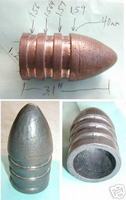
(1861-1865)

Weapons of War


Weapons of War
Reading Level
     edHelper's suggested reading level:   high interest, readability grades 4 to 6
     Flesch-Kincaid grade level:   4.32

Vocabulary
     challenging words:    mines, despite, successful, naval, military, wounds, easily, lighter, warning, attack, army, battle, order, navy, accurate, lines
     content words:    Civil War


Print Weapons of War
     Print Weapons of War  (font options, pick words for additional puzzles, and more)


Quickly Print - PDF format
     Quickly Print: PDF (2 columns per page)

     Quickly Print: PDF (full page)


Quickly Print - HTML format
     Quickly Print: HTML


Proofreading Activity
     Print a proofreading activity


Feedback on Weapons of War
     Leave your feedback on Weapons of War  (use this link if you found an error in the story)


Weapons of War
By Cathy Pearl
  

1     The Civil War used weapons that had never been widely used in battles. These new weapons were deadlier. Some leaders in the war were slow to change how they fought battles. This led to many more soldiers getting killed.
 
2     One of the new weapons was the minie ball. This was a new type of bullet that could be used in a rifle. Even though it was called a ball, it was really bullet shaped.
 
3     The first minie ball was not very accurate or widely used. But in 1848, a Frenchman redesigned it. The new bullet was lighter. Also, when it was fired from a rifle, it would spin. This made it more accurate and able to travel much farther. The bullet could go a half a mile. Soldiers could easily hit something two hundred fifty yards away.
 
4     This weapon changed the war. Muskets were only accurate to about fifty yards. This had made it easier for frontal attacks to work during earlier wars. Men would have to get very close together before they could shoot each other.
 
5     This bullet changed that. An army that was defending a position could easily fight back against an attack from the front. The attacking army did not have to get close before it could be shot. Despite this, many generals continued to order attacks from the front during the war. It led to many more men being killed.

Paragraphs 6 to 14:
For the complete story with questions: click here for printable


Copyright © 2009 edHelper