edHelper.com
Native Americans


The Yosemite Indians of the Ahwahnee Valley


The Yosemite Indians of the Ahwahnee Valley
Reading Level
     edHelper's suggested reading level:   grades 4 to 6
     Flesch-Kincaid grade level:   7.11

Vocabulary
     challenging words:    grudge, pronunciation, miserable, provided, treaty, unique, mysterious, settled, easily, defend, chief, investigate, tribe, supplies, escape, army
     content words:    Miwok House, Yosemite National Park, Native Americans, North America, Yosemite Indians, Great Spirit, Ahwahnee Valley, Mariposa Battalion, James D., Merced River


Print The Yosemite Indians of the Ahwahnee Valley
edHelper.com subscriber options:
     Print The Yosemite Indians of the Ahwahnee Valley  (font options, pick words for additional puzzles, and more)

     Quickly print reading comprehension

     Print a proofreading activity


Feedback on The Yosemite Indians of the Ahwahnee Valley
     Leave your feedback on The Yosemite Indians of the Ahwahnee Valley  (use this link if you found an error in the story)


The Yosemite Indians of the Ahwahnee Valley
By Joyce Furstenau
  

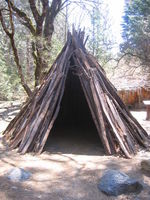
1     Caption: Miwok House, Yosemite National Park, California, USA.
 
2     Native Americans lived in North America thousands of years before non-Native Americans set foot here. They grouped themselves together into clans, or tribes. Each tribe had its own way of living. This made each tribe unique. The Yosemite Indians belonged to a group or clan known as the Miwok. Yosemite, pronounced yoh-sem-i-tee, was a name given to this tribe of Native Americans by the white newcomers. It is thought to be close to the pronunciation of an Indian word "uzumati," which means grizzly bear.
 
3     Legends tell of a band of peoples being led by the Great Spirit into a valley. These natives spoke the Miwok language and settled into the "Ah-wah-nee" valley, which means "a deep, grassy valley." Some say it means "place of the gaping mouth." Either way, the tribe took on the name of the valley in which they settled. It was later called Yosemite, which is now a national park in the state of California
 
4     The Ahwahneechees easily lived off the land in the Ahwahnee Valley. The streams were full of trout, and the forests provided bear, deer, and elk meat. The trees and bushes gave them acorns, pine nuts, fruits, and berries.
 
5     Around 1800, a mysterious disease forced them to leave their villages in the Ahwahnee Valley. The valley remained empty for many years. Several generations passed before a band of about two hundred Indians decided to move back to this fertile valley. Once again, the Ahwahneechee tribe lived well in the valley.
 
6     The discovery of gold in 1848 in the nearby mountains brought thousands of gold seekers. They scattered out among the hills churning up the land and streams in their search for gold. Those that followed brought in great herds of cattle that used up the acorns and grasses along the way. The Ahwahnees' source of food was used up, so they moved quickly to find new food sources.
 
7     As the Indians moved higher and higher into the mountains, their food supply dwindled. They began to prey upon the cattle and horses that belonged to the gold seekers. They raided the settlements for food and were met with guns and great resentment. As the violence grew, so did the gold seeker's fears. Finally, a group of men called commissioners was sent from Washington, D.C. to a place named Mariposa in the heart of the Yosemite area. Their mission was to try to subdue these "Yosemite" Indians and make a treaty with them.
 
8     In 1851, the Mariposa Battalion was organized. They elected a local trader named James D. Savage to head up the battalion. He lived in the Yosemite area and made himself powerful by marrying women from nearby tribes. He also had a personal grudge against the Yosemite tribe because several of his supply stores had been attacked, destroyed, and the men in charge murdered by them. He is reported to have said, "If I ever have a chance, I will smoke out the Grizzly bears (the Yosemites) from their holes." 1

Paragraphs 9 to 16:
For the complete story with questions: click here for printable


Copyright © 2008 edHelper